Temp Style fix for Cards on this page, remove when site has latest styles:
The Scroll More Code:
The following is code for the Large T.
To update the video, scroll down to where you see <video and update the <source src=, with the url of your video.
The following is code for the mobile version of the Large T.
To update the image, scroll down to where you see <img src=, with the url of your image.
OUR MISSION
The Tulane School of Architecture and Built Environment generates and applies knowledge that addresses urgent challenges of humankind.
FEATURED

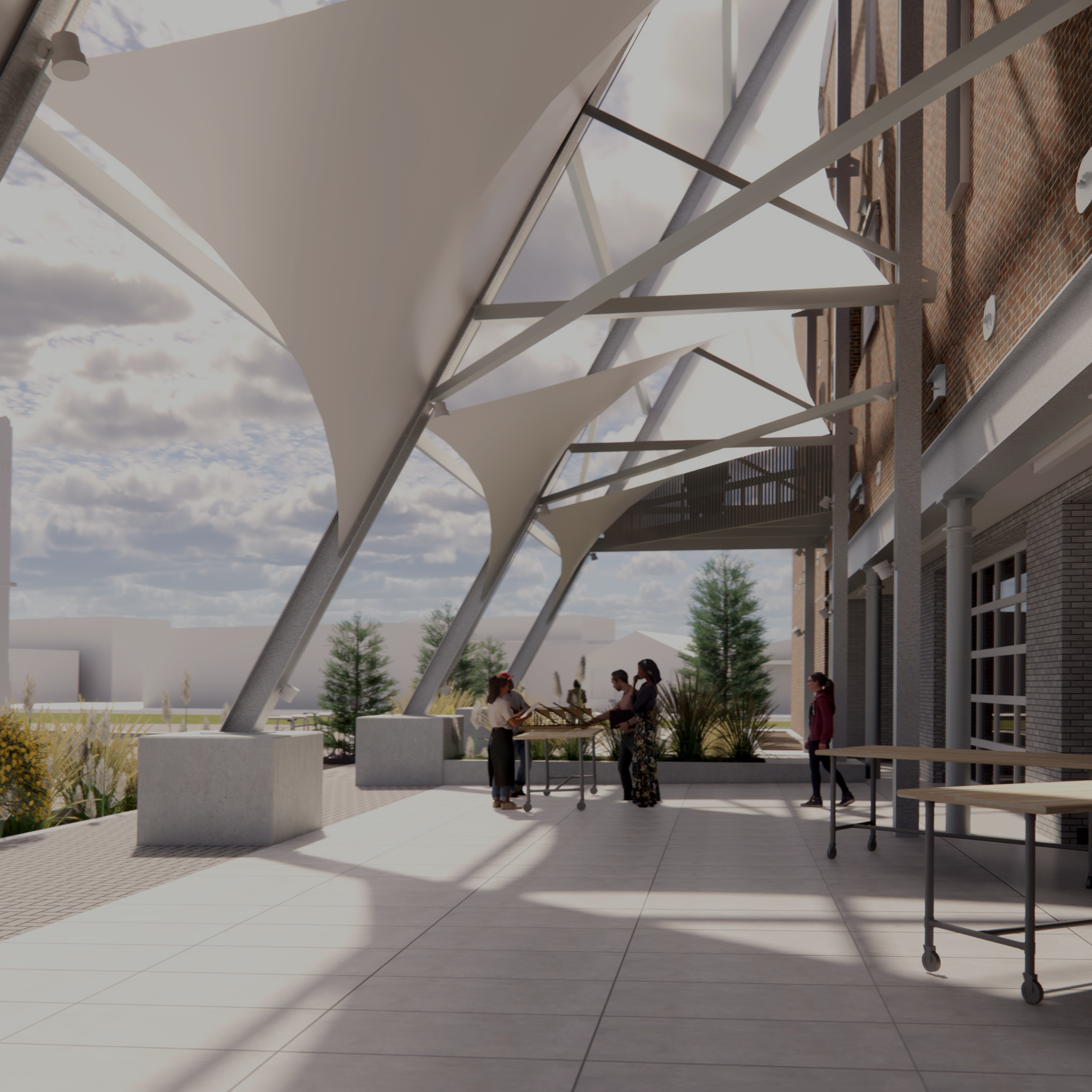
Historic renovation expands graduate educational space
The Tulane University School of Architecture and Built Environment is working with local developer Gulf Coast Housing Partnership (GCHP) to renovate 24,000 square feet in an historic building that once served as a department store and warehouse in Central City. The project will transform the building into The Graduate Hub.

Lecture Series and Public Programs
The school's 2026-2027 lecture series and public programs will follow in thematic parallel with the school's forthcoming 4th issue of The ReView book "Emergency: Planning and Adaptation," published by Actar. Explore invited guests, speakers, and programming.

John Dwyer named Director of the Albert and Tina Small Center for Collaborative Design
The Tulane School of Architecture and Built Environment has appointed John Dwyer as Director of the Albert and Tina Small Center for Collaborative Design and Professor of Practice in Architecture.

Eight faculty join Tulane School of Architecture and Built Environment
The Tulane School of Architecture and Built Environment is welcoming its 2026 cohort of faculty and announcing new leadership and promotions across several academic programs.

Tulane professor helps secure New Orleans’ place on ‘Irreplaceable America’ list
The city of New Orleans has been named one of 10 sites on the World Monuments Fund's inaugural "Irreplaceable America" list, a national initiative recognizing places where preservation is essential to understanding the richness and complexity of American history.

Faculty and Alums work recognized by the Louisiana Trust for Historic Preservation
This year, the Louisiana Trust for Historic Preservation recognized three TuSABE faculty and alums in their 2026 Preservation Awards. Heather Veneziano earned the Education Award, Allyson Hinz received the Sue Turner Preservationist of the Year Award, and Karina Roca was honored the Living Trades Award.

Tulane awards 2025-26 Climate Curriculum Prize
The Tulane Center on Climate Change and Urbanism (CCU) has awarded top honors to four faculty members for their significant achievements in teaching climate change, the latest awardees in the annual Tulane Prize for Climate Change Curriculum in the Built Environment.

Alumnus receives 2026 CNU Charter Award
Alumnus Alec Paulson (B.Arch '22) has been honored with a 2026 Student Merit Award from the Congress for the New Urbanism (CNU) for his undergraduate project, as part of the Addis Ababa River City Research Project, a Saul A. Mintz Global Research Studio.

Faculty shortlisted for Barcelona Opera House Competition
Dean Iñaki Alday and Professor Margarita Jover, with their firm aldayjover architecture and landscape, have been shortlisted among five finalist teams in the international competition. Their proposal was developed in collaboration with internationally renowned architect Sou Fujimoto and the firm GRAS.
MORE NEWS
Jill Stoll presents at Eyeopener Retreat at Cranbrook Academy of Art
Professor of Practice Jill Stoll was invited by Laurie Haycock Makela to present at the 2026 Eye Opener Retreat at Cranbrook Academy of Art, a five-day gathering of women artists, designers, and educators centered on creative practice, dialogue, and exchange.
Two Faculty's project exhibited at the UIA World Congress of Architects 2026
“Day Care Center for People with Alzheimer’s Disease” has been selected as one of the 207 works included in Arquitectura española: 30 años en transición (1996–2026), the exhibition presented by CSCAE as part of the UIA World Congress of Architects 2026 at Disseny Hub Barcelona.
Tulane Architecture Alumnus Robert Young elevated to AIA College of Fellows (FAIA)
Tulane School of Architecture and Built Environment alumnus Robert Henry Young, M.Arch ’92, has been elevated to the College of Fellows of the American Institute of Architects (FAIA), one of the highest honors in the architecture profession.
Tulane faculty uncovers a property tax trap for senior homeowners
Casius Pealer, Senior Professor of Practice in the School of Architecture and Built Environment, published a commentary in local investigative outlet Verite News revealing that a policy designed to help elderly and disabled homeowners in Louisiana pay less in property taxes has been doing the opposite in Orleans Parish
Tulane Design and Architecture students take the stage at Shop! MarketPlace 2026
Four Design and Architecture students joined Meghan Saas, Professor of Practice in Design, on stage at Shop! MarketPlace for a panel titled "Watch This Space: Young Designers Weigh in on What's Next."
Faculty awarded COR Research Fellowship Grant for innovative bio-based materials research
Assia Crawford, PhD, Assistant Professor, has been awarded the COR Fellowship grant in support of her research on sustainable building materials titled “Species-Driven Optimization of Mycelium Insulation Panels with Integrated Air Cavities,” which aims to advance the development of low-carbon, bio-based insulation systems derived from fungal mycelium.
The following is code for the Dean Message. To change the images, look at the two <img code areas, and change the src=", to have the location of the image. One for Desktop, one for is for mobile.

Dean's Message
What distinguishes our graduates is the breadth of their formation — disciplinary expertise always paired with something more: a sensitivity to the built environment in its fullest sense.