Faculty work on Humayun's Tomb Museum in India featured in Architectural Record

march 24, 2026
BY Emily capdeville
Pankaj Vir Gupta, Katz Professor of Architecture & Urbanism, had his project for the Humayun’s Tomb Museum published in the March 2026 issue of Architectural Record, in both the print and in the online edition. (Read more here.)
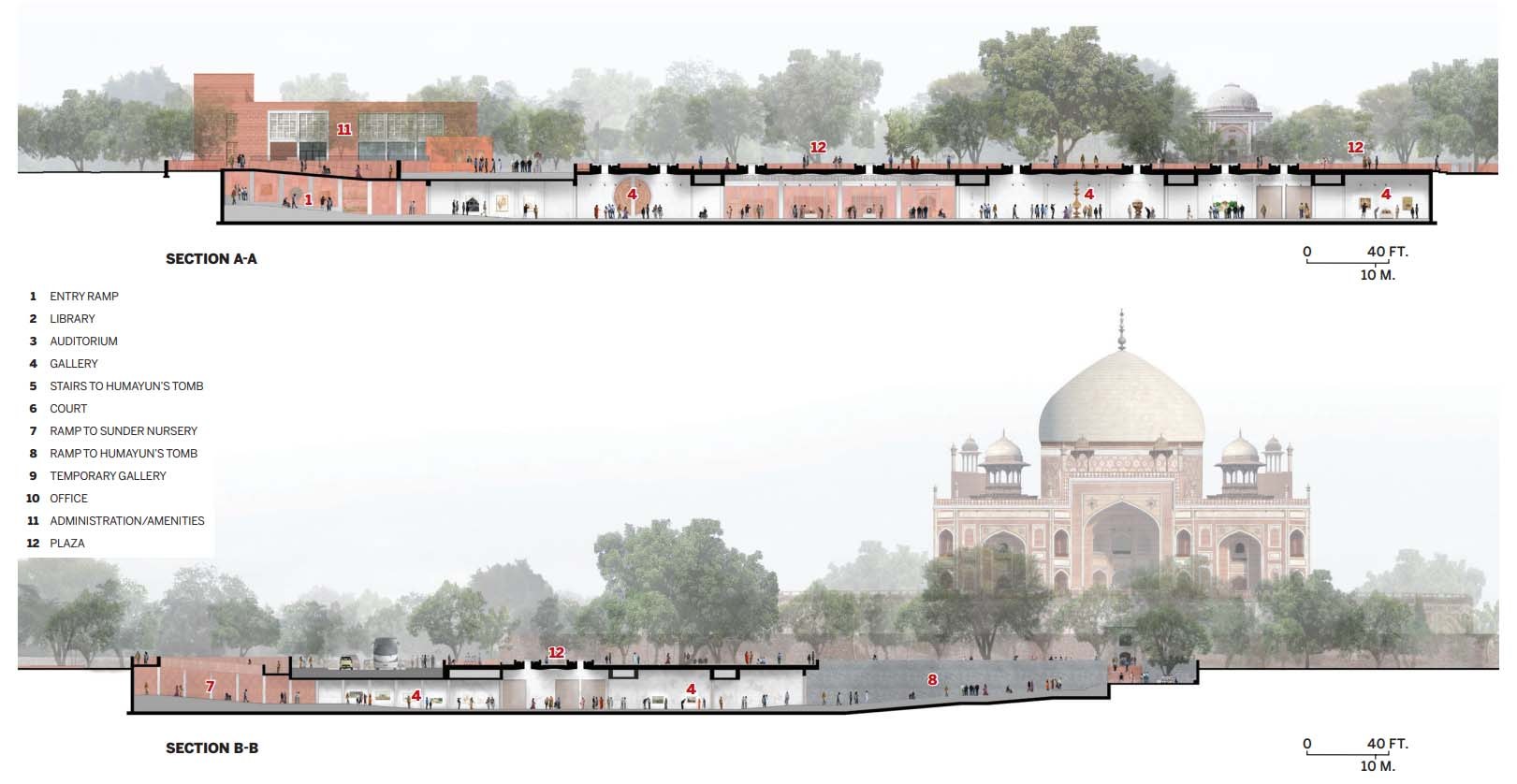
Designed by vir.mueller architects, Vir Gupta's practice, the mostly subterranean curatorial center comes more than 450 years after the completion of the domed mausoleum. Developed by the Aga Khan Trust for Culture (AKTC) in partnership with the Archaeological Survey of India, the construction and opening of this space is a significant achievement, "the culmination of 25 years of conservation efforts in a 300-acre site that encompasses Humayun's Tomb, Sunder Nursery and the Nizamuddin Basti," according to the museum website.

An excerpt of the article is below:
In a city of exceptions, Hazrat Nizamuddin Basti is exceptional. Today a neighborhood of Delhi, it was once the humble village of Ghiyaspur, whose destiny changed forever when the Sufi saint Nizamuddin Auliya (1238–1325) settled there. A center of spirituality in his lifetime, the village became a place of pilgrimage after his death. Today, over 4 million visitors per year descend on his tomb, located at the heart of one of the most densely populated places in India—25,000 people, 90 percent of them Muslim, live cheek by jowl in a mere 0.07 square miles. Nizamuddin’s aura extends all around the Basti—such was his reputation that the rich and powerful chose to be buried nearby. Among the dozens of tombs dotting the landscape, by far the grandest is the monument to the second Mughal emperor, Humayun (1508–56). Commissioned by his first wife and chief consort, Bega Begum—who in 1565 summoned architect Mirak Mirza Ghiyas from her native Persia—the domed mausoleum, surrounded by formal gardens, was completed in 1572. The first of its kind in India, the 154-foot-tall marble- and sandstone-clad structure is the ancestor of the legendary Taj Mahal (1631–53). Just over four and a half centuries later, Delhi-based Vir.Mueller Architects, headed by Pankaj Vir Gupta and Christine Mueller, have completed a new museum to welcome visitors to Humayun’s Tomb.
Click over to Architectural Record to read the full article.

Gupta, along with Christine Mueller and Cyrus Samii, co-authored the monograph Golconde: the introduction of modernism in India . The book documented a rare and early use of cast-in-place concrete construction in India. He is also the Director and Co-Founder of the Yamuna River Project, which confronts the dilemmas of unplanned urban expansion and challenges posed by extreme weather in mega-cities. This project has won several national and international awards and achieved international recognition.
Related

New Orleans Book Fest highlights faculty contributors
Tulane’s Mintz Professor in Architecture Richard Campanella will be featured in this year's Tulane Book Festival, which focuses on the story of 250 years of American History. Campanella will offer his insight into that history through a Louisiana lens.

School releases The ReView, 3rd Edition: Common Good
The ReView, 3rd Edition: Common Good, the school's annual publication featuring the work of students and faculty from the 2023-24 academic year, was released in January. The book includes studio descriptions, research projects, and essays that contemplate the ways in which working in the built environment can contribute to aspects of our common good.