Faculty Awarded COR Research Fellowship Grant for Innovative Bio-Based Materials Research
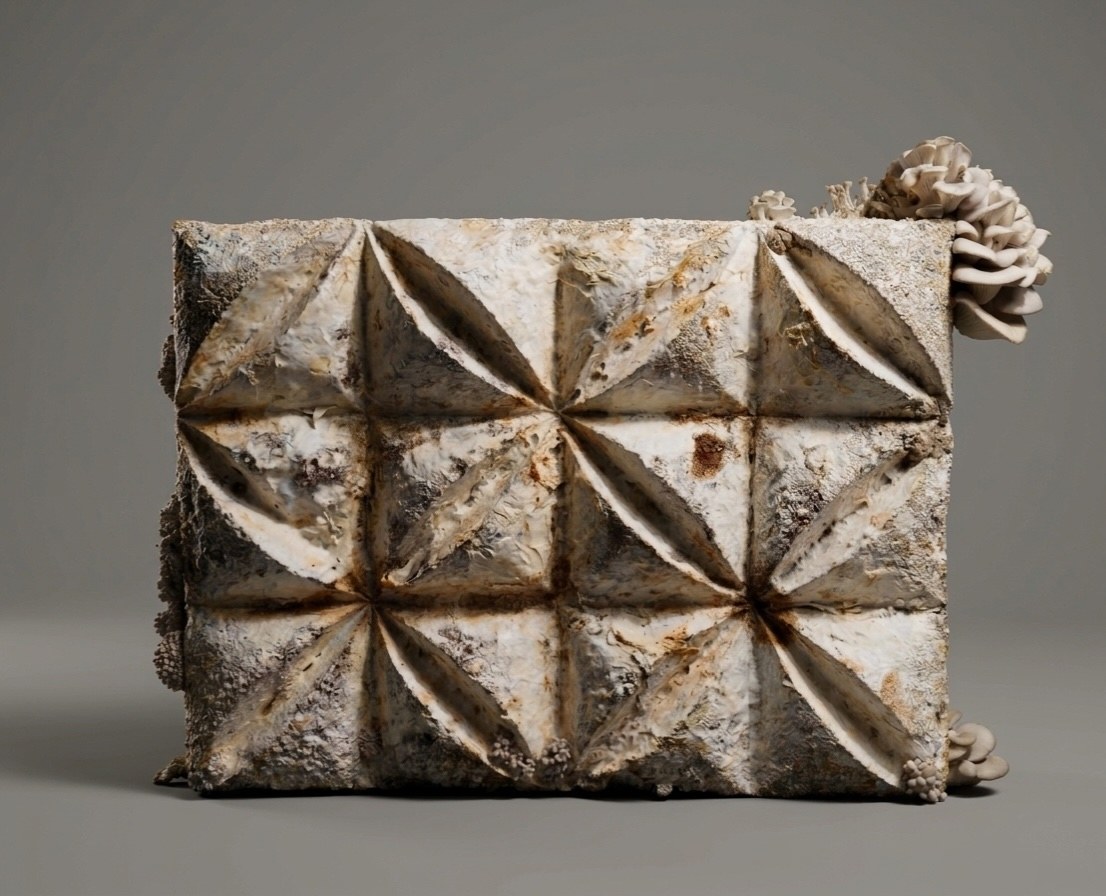
photo courtesy of Dr. Assia Crawford
April 24, 2026
BY Emily capdeville
Dr. Assia Crawford, Assistant Professor in the School of Architecture and Built Environment, has been awarded the COR Fellowship grant in support of her research on sustainable building materials. The Tulane University Senate Committee on Research, in conjunction with the Provost’s Office, provides up to $10,000 for these fellowships to support research activities by faculty. This recognition and support of Dr. Crawford's work clearly communicates the School's commitment to collaborating across disciplines to maximize possibilities of available to students and faculty alike, while increasing the problem-solving potential of the work of our constituents.
Dr. Crawford's funded project, “Species-Driven Optimization of Mycelium Insulation Panels with Integrated Air Cavities,” advances the development of low-carbon, bio-based insulation systems derived from fungal mycelium. The research explores how different fungal species, combined with waste-derived substrates and engineered internal geometries, can significantly improve thermal and acoustic performance while maintaining structural integrity and scalability.
Continue reading below as Dr. Crawford describes the funded work:
"My research develops bio-based insulation from fungal mycelium, the root-like network of fungi, grown on agricultural byproducts. The project advances beyond solid mycelium panels by introducing internal air pockets cultivated directly into the material. These engineered voids trap still air to impede heat transfer, while the living mycelium reinforces the cavity boundaries, preserving mechanical integrity. The result is a panel that outperforms a solid panel of equivalent thickness without additional material or prolonged growth time.
"The study systematically compares four fungal species, oyster mushrooms, rishi mushrooms, turkey tail, and shitake mushrooms, grown on regionally abundant waste substrates. Each species exhibits distinct growth kinetics and binding behavior, and the fellowship supports rigorous, standardized testing of thermal conductivity, sound absorption, and compressive strength, as well as lab consumables. By the project's end, I expect to identify species-substrate-geometry combinations that reduce thermal conductivity and increase sound absorption while retaining adequate compressive strength for interior applications.
"This year also marked the relocation of Wild Futures Lab to Percival Stern Hall, embedding biological material research within the design curriculum. Early pilot work here confirmed the feasibility of large-format mycelium panels and their subtractive machining, providing the confidence to pursue this fellowship. Receiving the award affirms the University's commitment to interdisciplinary research at the intersection of architecture, biology, and environmental responsibility."
Congratulations to Dr. Crawford for her fellowship and for a productive and impactful first year at Tulane!
Related

Faculty publishes, 'Bios in Search of Zoe,' an Ecological Graphic Novel
Assistant Professor of Architecture Assia Crawford's new book, Bios in Search of Zoe, exploring the intersections of technology and environmental uncertainty, was published by Actar in August.
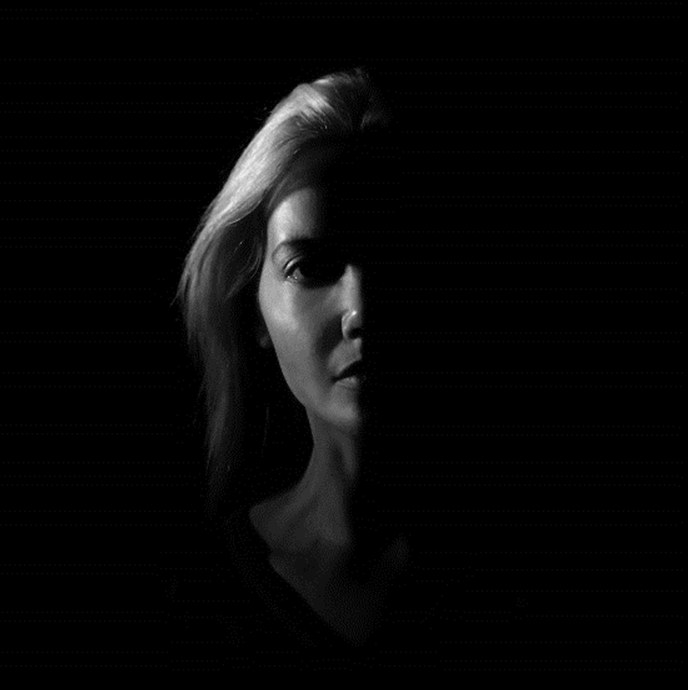
Assistant Professor Assia Crawford has been elected to serve on the board of ACADIA
Assistant Professor Assia Crawford has been elected to serve on the board of ACADIA, an international network of digital design professionals, which facilitates critical investigations into the role of computation in architecture, planning, and building science, encouraging innovation in design creativity, sustainability, and education.