Thesis Highlights
"After the Kiln"
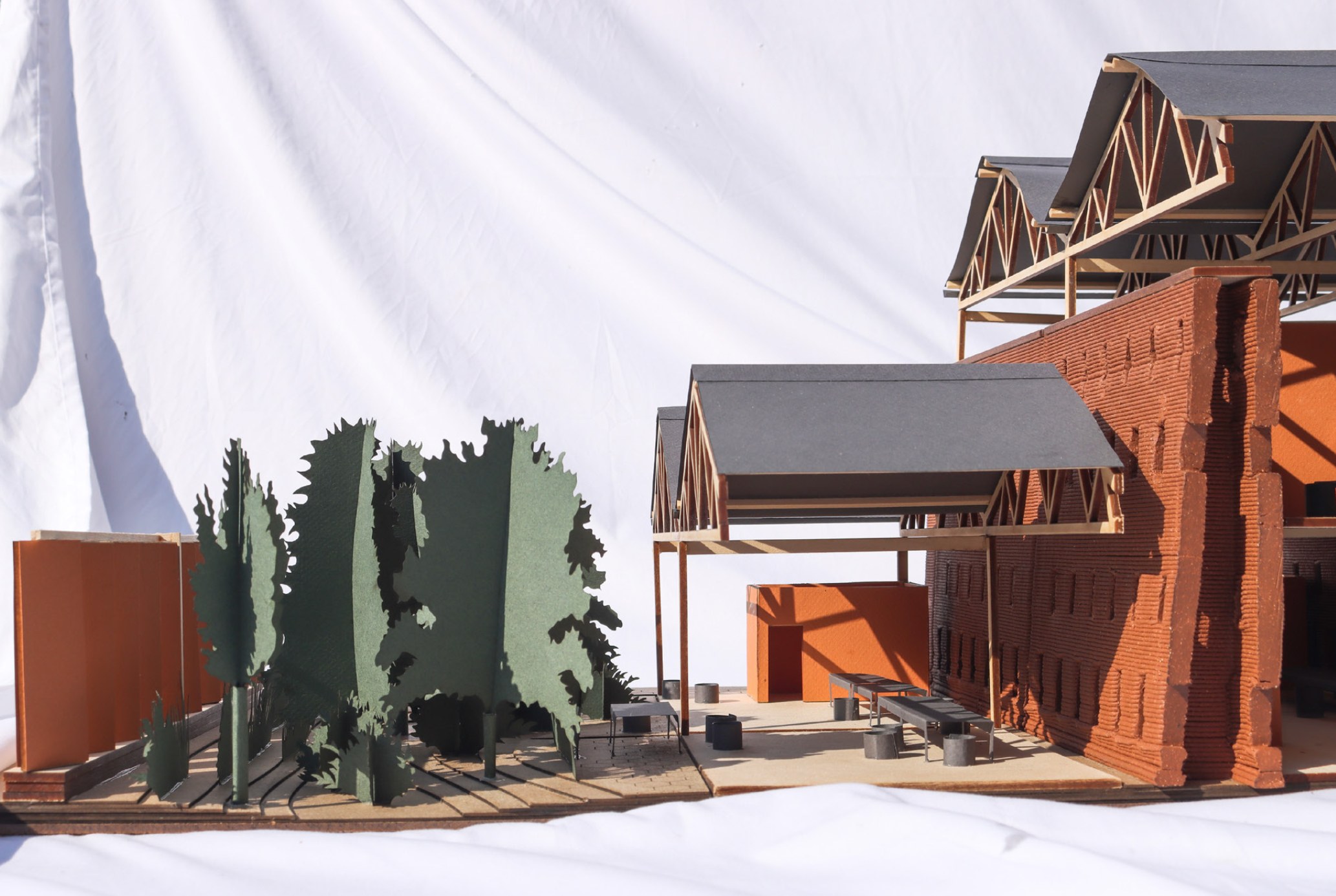
Ben Cornett and Kris Smith, 2025
"After the Kiln"
This thesis examines the role a locally abundant material can perform to reduce exposure to toxic chemicals while also exploring the implications on material life-cycle and community agency.
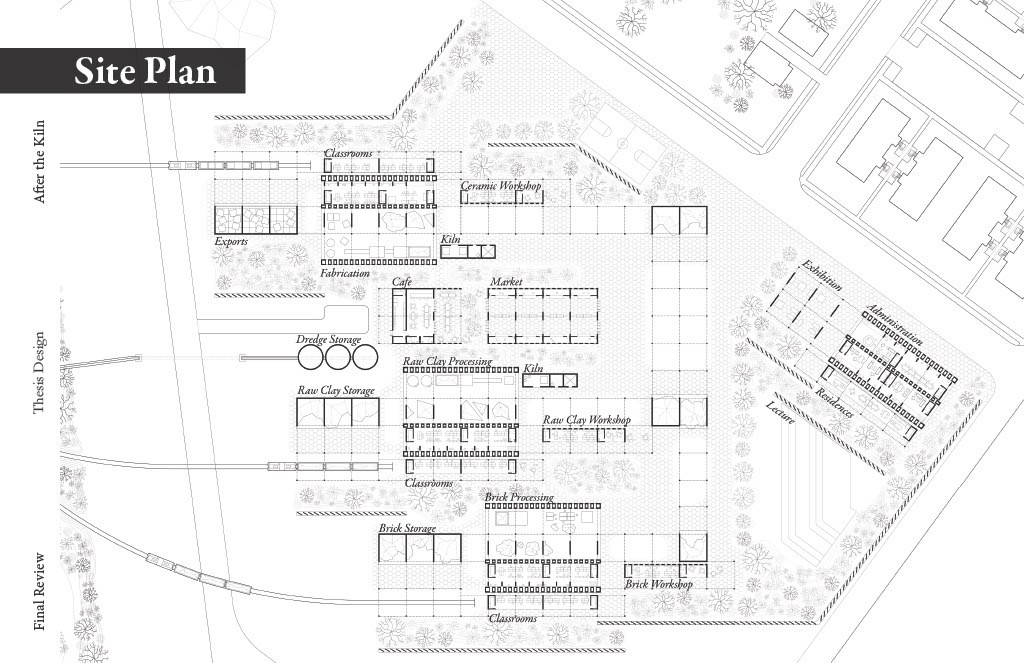
By implementing a closed-loop system of clay harvesting, processing, use, and reuse, this thesis tests how the flow of material through this system can be applied to architecture by influencing program distribution, building enclosure, and performance.
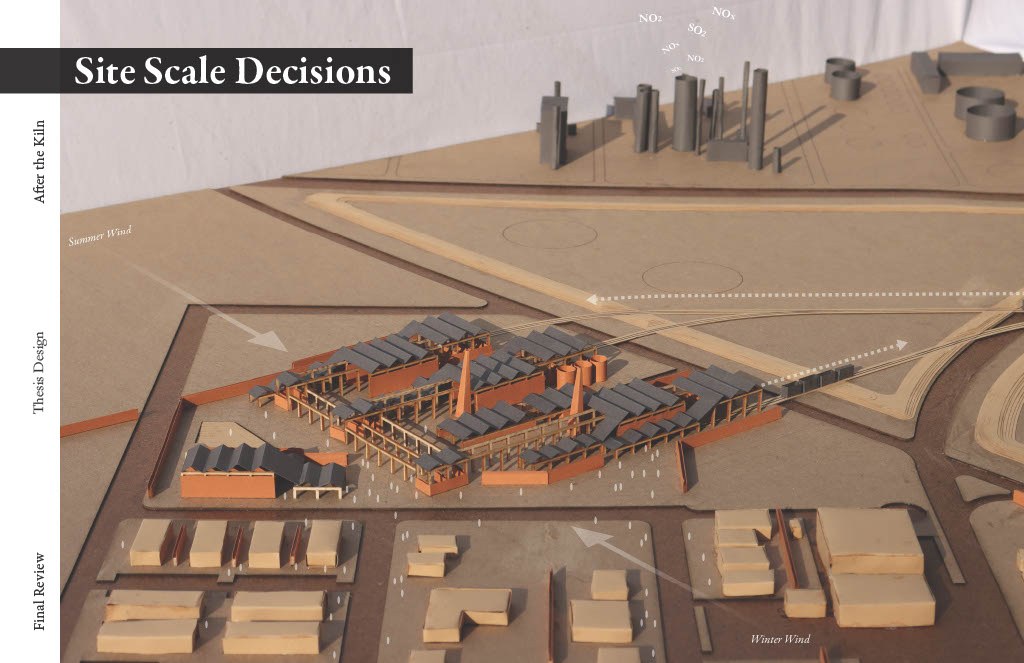
The burden of the Gulf Coast’s industrial legacy falls heaviest on Black and indigenous communities, who inhabit the most polluted and rapidly disappearing lands along the coast. The burden of the Gulf Coast’s industrial legacy falls heaviest on Black and indigenous communities, who inhabit the most polluted and rapidly disappearing lands along the coast. Nowhere is this environmental injustice more evident than in Port Arthur, Texas, where a historically Black community lives in the toxic shadow of the Motiva and Valero oil refineries—two of the largest facilities in North America. Daily exposure to toxic pollution has led to devastating health impacts, with residents facing high rates of cancer and respiratory illness. Meanwhile, the community receives minimal economic benefit from the refineries’ presence, leaving residents with little control over their future.
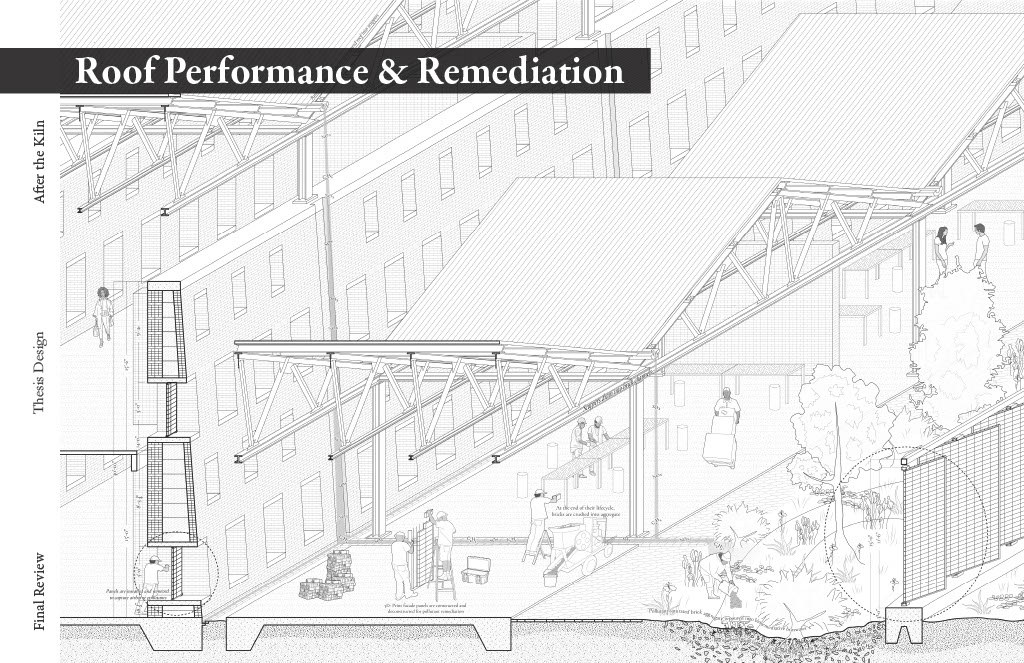
True reparations require not just the return of land autonomy to Black and indigenous residents, but also the healing of a landscape scarred by generations of toxic contamination. This thesis examines the role a locally abundant material can perform in reducing exposure to toxic chemicals while also exploring the implications on material life-cycle and community autonomy. Due to its natural abundance in the soil and performative material qualities such as pollutant binding and filtration, clay has been identified as the material of investigation. By implementing a closed-loop system of clay harvesting, processing, use, and reuse, this thesis tests how the flow of material through this system can be applied to architecture by influencing program distribution, building enclosure, and performance.
The design becomes a case study that can be replicated throughout the community, creating a network of remediative infrastructure. Through this system, Port Arthur residents gain both a cleaner environment and a stake in their economic future— achieving environmental justice through the intentional reuse of the region’s most foundational material.
Faculty Thesis Directors: Juan Medina, Cordula Roser Gray and Edson Cabalfin
WORK