Thesis Highlights
"Greenhousing"

Ben Brimer, 2025
"Greenhousing: How collective housing can utilize greenhouses to foster community and promote long-term resilience with passive strategies"
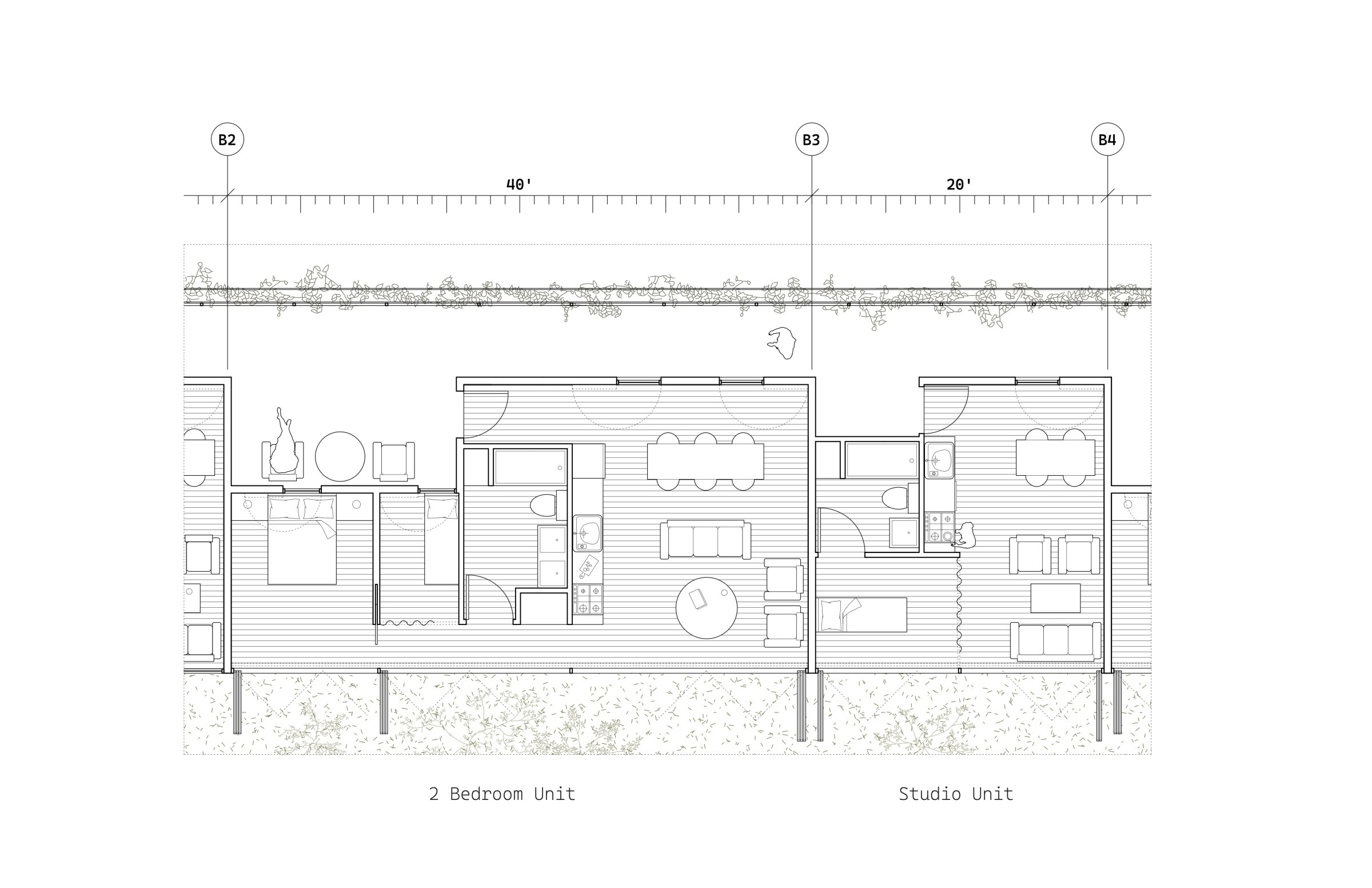
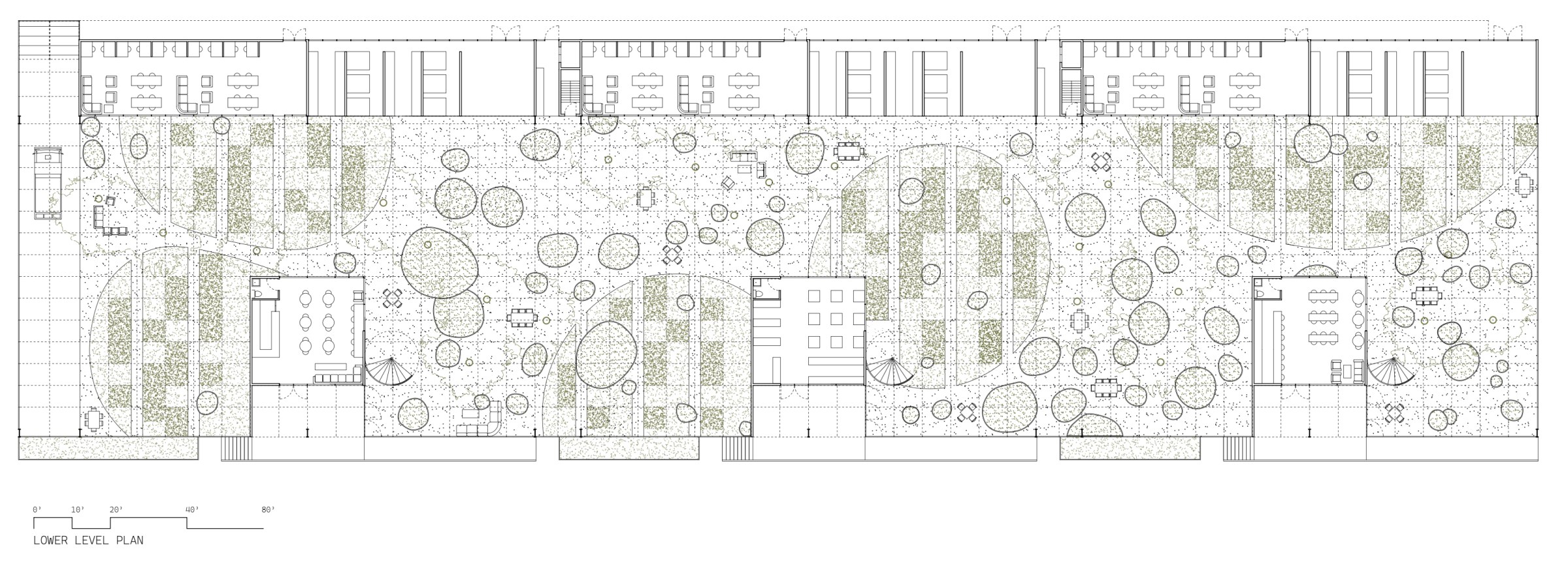
Attaching a greenhouse structure to a collective housing building in Raleigh, North Carolina can decrease reliance on natural gas as a non-renewable source of thermal comfort, and can increase social connection by providing shared tasks and amenities.
North Carolina is an extremely heavy consumer of natural gas for its size relative to other states. In 2023, natural gas made up 43% of North Carolina’s energy consumption. With a 25 year supply left in domestic reserves, the price of natural gas is rapidly increasing, making it less and less affordable for North Carolinians to heat their homes. In 2017, 67% of residential rate hikes in Duke Energy’s North Carolina territories were due to natural gas price increases. On the other hand, in the city of Raleigh, tens of thousands of young professionals are moving every year to work in the tech and healthcare sectors, staying for a short period, and moving away. This makes it very difficult for this population to integrate socially into their communities. It is estimated that 49% of Raleigh’s current millenial population are transplants. Both these issues underscore the need for collective housing in Raleigh that maximizes passive strategies for thermal comfort and provides outlets for social connection. By attaching an industrial-scale greenhouse to a collective housing building in Raleigh’s central business district, both these issues are addressed--through the greenhouse’s ability to generate heat and supply it to the homes during cold months (when the most natural gas is consumed), and through the shared tasks and responsibilities associated with maintaining the greenhouse that promote social connection.
Faculty Thesis Directors: Juan Medina, Cordula Roser Gray and Edson Cabalfin
WORK