Thesis Highlights
Carbon Budget Zero

The built environment, currently the primary contributor to our society's carbon footprint, presents a pressing need for change. The construction industry's current 40% share of global emissions and 32% consumption of natural resources are not just alarming figures but urgent calls to action. These statistics underscore the immense potential for our industry to lead significant change in line with the UN's 2030 targets. It is crucial to overhaul the construction economy, seize opportunities to reduce our environmental impact and develop scalable solutions to decarbonize the built environment.

The industry predominantly operates under a linear economic model of "take, make, dispose," utilizing materials for construction and discarding them at the end of their life cycle. This practice is attributed to the one-time use assembly of materials, which impedes their potential for reusability. Bedside design strategies have traditionally focused solely on the building's lifetime operational carbon emissions, and embodied emissions were relegated. However, it is crucial to consider the materials' environmental impact during extraction, production, and transportation before reaching the construction site. As a result, material selection plays a critical role in a desperate need for alternatives to reduce carbon emission in the building sector.
WORK
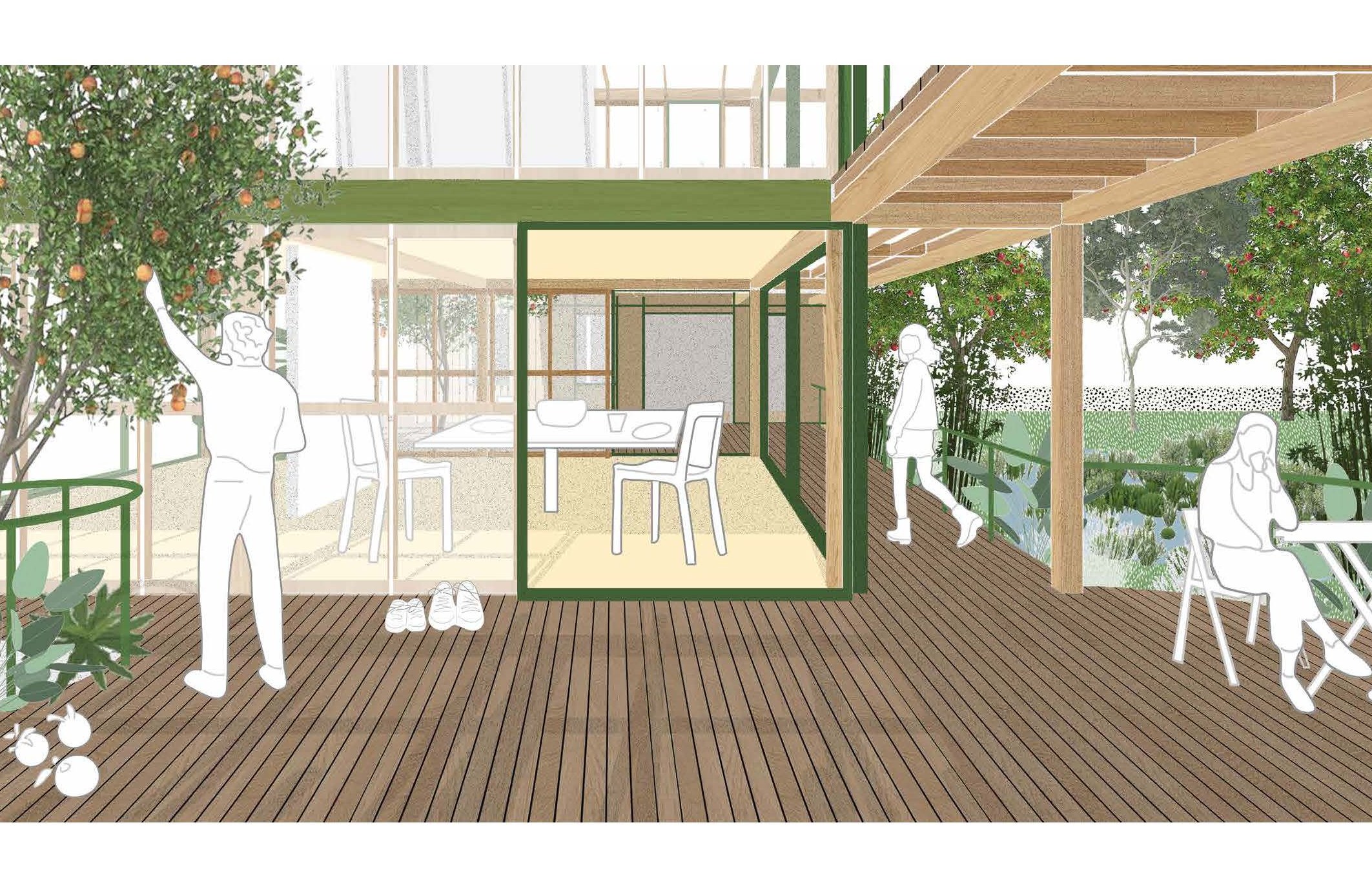
A Seat at the Table
By Sofia Vladimir


By Bridget Thornberry

