Tulane students travel to India to study Urbanism and Ecology in Delhi

November 3, 2026
BY Rawad Nahhas
This fall, students in the Tulane School of Architecture and Built Environment's Yamuna River Project (YRP) studio traveled to New Delhi to study the conditions they have spent the semester researching: a polluted river, a stressed infrastructure and a planned capital strained by climate change and rapid growth.
The YRP is a multidisciplinary research initiative established by Dean Iñaki Alday and Pankaj Vir Gupta, Katz Professor of Architecture and Urbanism, to develop strategies for the ecological recovery of the Yamuna, one of the most polluted rivers on the planet. Its premise is that the river is not the problem so much as a symptom of broader social challenges, therefore any remedy has to address the city's culture, health, economy, public space, housing and governance together. Over 12 years, the project has engaged more than 200 students and 80 faculty across two academic institutions, and its early research was published in Yamuna River Project: New Delhi Urban Ecology (Actar, 2018), which the German Architecture Museum named one of the year's top ten architecture books.
The current phase, New Delhi Urban Futures, began at Tulane in 2025. It moves attention from the river's edges to the planned urban core, which was designed for a very different economy and population and now shows dysfunction in its air, water and infrastructure. The studio asks how planned city fabrics can cope with pressures they were never built to accommodate while also supporting ecological recovery and social equity. Its territory runs from the Aravalli Ridge to the Yamuna, including the historic core and recent redevelopment such as the Central Vista.

The studio (ARCH 4041/5051/6051) is an advanced, six-credit research course taught by Gupta and Research Assistant Professor Jess Vanecek. It is built around three outcomes: a substantial body of collective research, an individual urban project, and a shared understanding of climate adaptation. Each student picks a scale and program, from bus stops, market stalls and public toilets to low-income housing, schools and bathhouses to sewage treatment, waste management and water infrastructure. The studio draws on experts in India and the United States, and accountability is part of its method: findings are shared through exhibitions and publications as a form of service to underserved urban communities. Final Reviews are scheduled for Wednesday, December 9.
In Delhi, students visited biodiversity parks and a water treatment plant, traveled the Yamuna by boat, studied historic and modernist architecture, and met scientists, practitioners and a government advisor. As the reflections below show, the trip turned a semester of research into direct observation and gave students a clearer sense of the people and efforts already at work in the city.
STUDENT REFLECTIONS

Kiersten Wilson
Bachelor of Architecture '27
The trip gave me a better understanding of the city's relationship between architecture, culture and environmental systems. The biodiversity parks showed the potential for ecological restoration, while the Yamuna boat tour revealed the extent of the river's challenges. It challenged me to think about how architecture can better connect ecological systems, infrastructure and everyday urban life.

Jed manning
master of architecture '27
The Yamuna River Project gave us a once-in-a-lifetime chance to see Delhi from a perspective none of us could have replicated on our own. Our research could never replace the insight gained from experiencing the city in person. I hope to help bring positive change to the city of Delhi.

sophia drozd
bachelor of architecture '27
Experiencing the city firsthand has largely influenced my understanding of what it means to design within such an intricate and multifaceted environment. Meeting experts who live and work in Delhi helped us recognize the complexity of its challenges and the efforts already working to address them. Delhi showed that architecture cannot be understood through maps, statistics and academic research alone.
The Yamuna River Project research trip to New Delhi was made possible by the Sheldon and Audrey Katz Foundation and the Saul A. Mintz Global Research Studios Fund.
Related

Faculty and recent alumni present at Earth USA 2026
Associate Professor Adam Marcus, Delaram Khoshhal (M.Arch *26), and Lydia Desormeaux (MSHP *26) presented research at the 13th International Conference Earth USA 2026 on Architecture & Construction with Earthen Materials in Santa Fe, New Mexico.
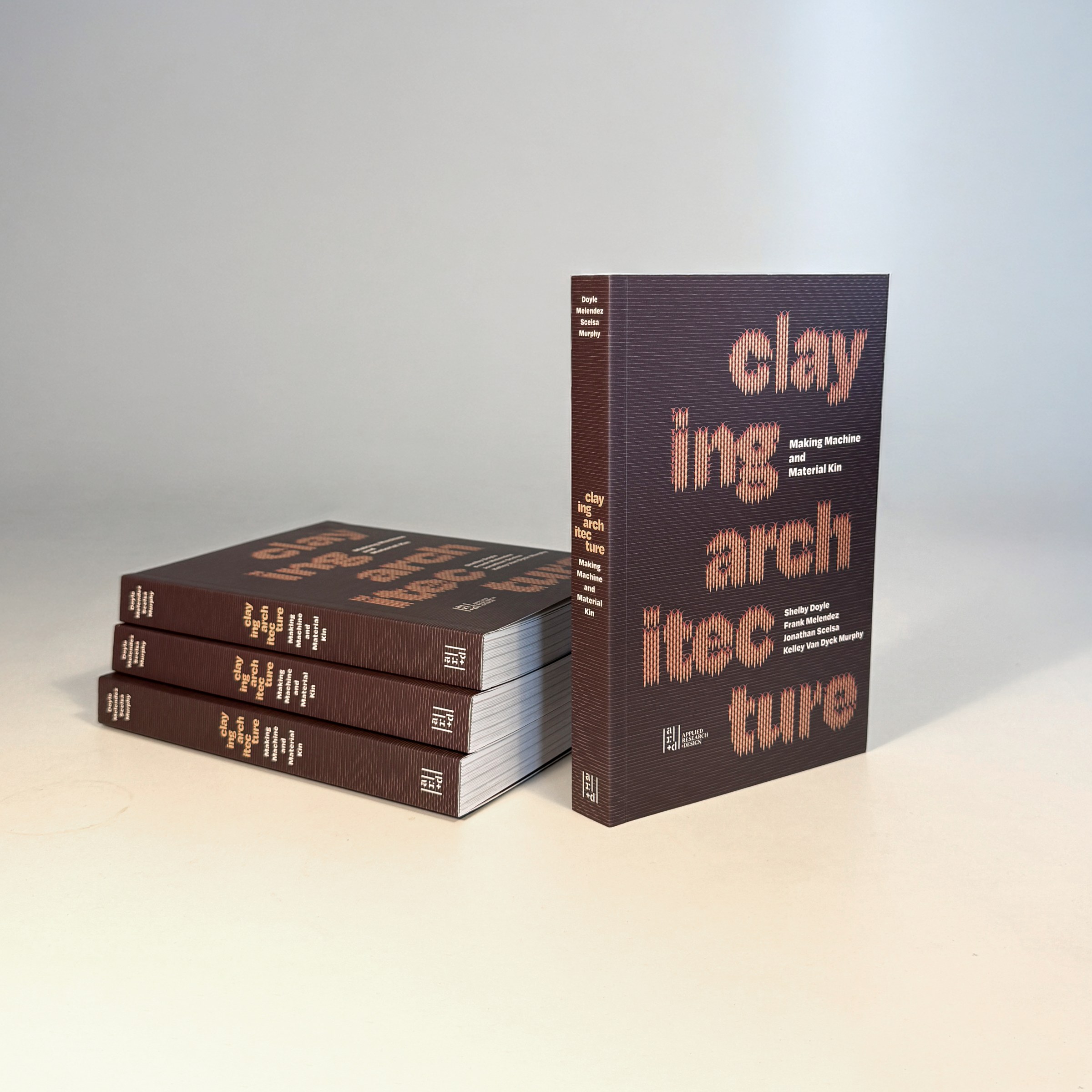
Two faculty members contribute to Claying Architecture
Adam Marcus and Assia Crawford Ph.D. have each written a chapter in a new book titled Claying Architecture: Making Machine and Material Kin.